Constitutional
Indo-China
By Sachin Pundir | October 16, 2025 · 2 min read
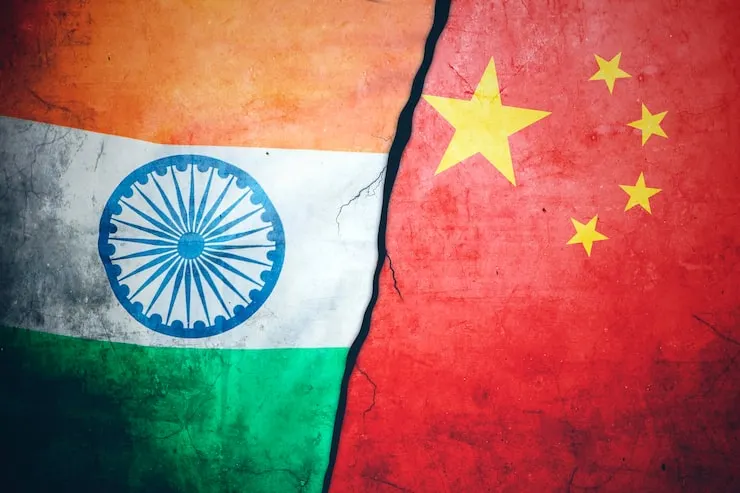
Here’s a summarized and visually organized version of your detailed notes on India-China relations, using italics, bold points, and color cues for clarity:
Significance of China for India 🟢
- Industrial Raw Material Dependency:
- China = India's largest trading partner (FY 2023-24, USD 118.4B).
- >70% of Active Pharmaceutical Ingredients (APIs) imported from China.
- Electronic components imports > USD 12B; solar equipment 60% sourced from China.
- Domestic manufacturing efforts will take years to reduce dependency.
- Technology and Digital Infrastructure:
- Chinese smartphones = >75% market share in India.
- Critical telecom equipment & EV battery technology rely heavily on China.
- Security concerns exist, but influence persists.
- Investment and Expertise:
- Chinese investments crucial for several Indian unicorns (USD 3,500M in 18 startups as of 2020).
- Technical expertise in infrastructure, high-speed rail, and industrial development.
- Trade Route Dependency:
- 55% of India's trade passes through South China Sea & Malacca Straits.
- RCEP & regional connectivity highlight China’s influence over India’s trade partners.
Major Areas of Contention 🔴
- Border Disputes:
- 3,488 km LAC is volatile; Galwan Valley standoff (2020).
- China occupies ~38,000 sq km in Aksai Chin & claims 90,000 sq km of Arunachal Pradesh.
- Military infrastructure & dual-use villages along LAC continue to expand.
- Economic Imbalances & Trade Deficit:
- Trade deficit with China = USD 85B (2024).
- Anti-dumping measures exist, but Chinese goods enter via ASEAN & FTAs.
- Water Resource Disputes:
- China controls Brahmaputra upstream; massive dams & hydrological data restrictions.
- Cyber Threats:
- Multiple attacks on Indian power grids and institutions (e.g., AIIMS ransomware).
300 Chinese apps banned; Huawei & ZTE excluded from 5G networks.
- Regional Influence & Strategic Alliances:
- Belt and Road Initiative (USD 62B in Pakistan) challenges India’s regional leadership.
- China’s naval presence in Indian Ocean & support to Pakistan aggravates tensions.
- India’s alignment with QUAD and US leads to strategic competition.
- Diplomatic & International Forums:
- China blocks India’s aspirations in NSG, UNSC, and international governance reforms.
- Continues support for Pakistan-based actors at UN forums.
Measures India Can Adopt 🟡
- Economic Diversification & Self-Reliance:
- Expand PLI schemes, strengthen MSMEs, develop domestic APIs, electronics, solar & battery manufacturing.
- Forge tech partnerships with Japan, South Korea, EU; implement smart protectionist measures.
- Strategic Military Modernization:
- Upgrade LAC infrastructure, enhance satellite & drone surveillance.
- Build mountain warfare capabilities, quick reaction forces, and logistics improvements.
- Regional Leadership Enhancement:
- Strengthen BIMSTEC, Indian Ocean Rim initiatives; counter BRI with Necklace of Diamonds strategy.
- Promote alternative supply chains & cultural exchanges in Southeast Asia.
- Diplomatic Engagement:
- Maintain dialogue while protecting core interests.
- Balance relationships with US, China, and Russia to ensure strategic autonomy.
- Economic Leverage Development:
- Create alternative markets (UK, EU), strengthen global supply chain position (China+1 strategy).
- Maritime Strategy Enhancement:
- Strengthen naval presence, develop ports via Sagarmala Project, enhance surveillance in Arabian Sea.
Conclusion ✅
- Recent agreements (Depsang Plains, Demchok) = positive step.
- India must continue multifaceted strategy:
- Economic diversification, military modernization, regional leadership, and diplomatic engagement to balance relations with China.
1 Comment
Sachin Pundir
Sachin PundirTue Oct 21 2025
Nice